

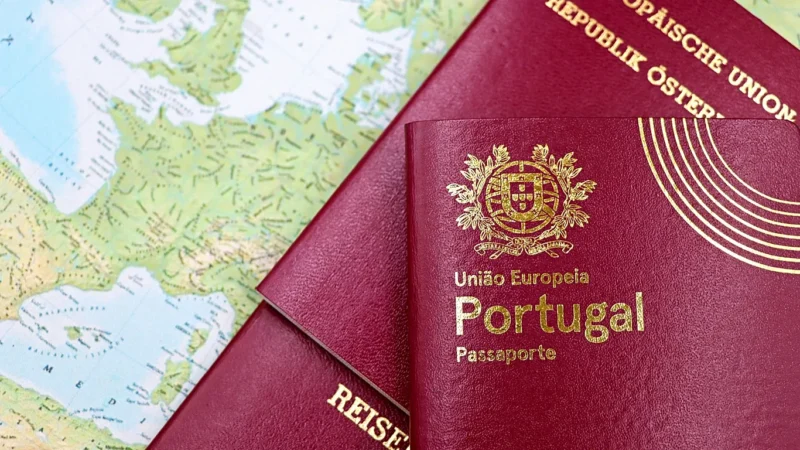
The topic of Portuguese nationality in 2026 remains one of the most sensitive and closely followed. There are clear signs of legislative debate and political intent to adjust the rules, but not everything is predictable: part of what is being discussed may move forward, be changed, or remain on hold. For anyone interested in nationality, the decisive point is not to “guess” what will happen, but to prepare a solid process: clearly defined eligibility, a consistent documentary chain, and realistic expectations about timelines and stages.
Portuguese nationality in 2026
Nationality is an area where small legal changes can have a major impact on the final outcome. In 2026, the context is shaped by two simultaneous movements:
-
public and legislative discussion about changes (with different proposals and interpretations);
-
operational pressure on the registration and processing system, which makes the quality of the application even more relevant.
This means the year is likely to be less about “new, closed rules” and more about “adjustments and controlled uncertainty,” where preparation is the best protection.
What’s on the table in 2026
Without making predictions, there are recurring lines of discussion when nationality is addressed:
-
access criteria and effective ties to Portugal;
-
evidentiary and documentation requirements;
-
clarifications on who can apply and under what conditions;
-
stronger formal checks and process consistency.
The key point is that even when the law changes, the practical logic remains: the decision depends on eligibility and proof. If the evidence is weak, legal debate does not solve the problem.
What changes in practice, even without “major” legal changes
Even when there is no disruptive legislative change, practice can shift in meaningful ways through:
-
greater scrutiny of documentary coherence;
-
a higher demand for consistency across certificates, records, and identification;
-
requests for clarification when there are discrepancies in names, dates, or parentage;
-
greater sensitivity to gaps in the documentary chain.
Put simply: many “nationality problems” are not legal; they are documentary.
The documentary chain is the core of the process
A nationality application rarely fails due to lack of intent. It fails for one of these reasons:
-
incomplete or outdated documents;
-
identification discrepancies (names, spellings, dates, places);
-
lack of proof of family linkage when a chain across generations is required;
-
missing translations or applicable formalities when documents are foreign;
-
lack of coherence between what is declared and what the documents show.
The documentary chain should be seen as a continuous line: every “claim” must be supported by a document, and every document must fit with the others.
When it makes sense to proceed, and when it makes sense to pause and structure
Without providing individual advice, there is a useful principle:
-
if eligibility is clear and the documentary evidence is consistent, the process tends to be more efficient;
-
if there are doubts about eligibility, or if the documentation has gaps, moving forward without a map tends to increase risk and time.
This is especially important in a year with legislative noise: in an uncertain environment, fragile applications become even more exposed.
Practical checklist: how to reduce risk in 2026
Before thinking about “timelines,” confirm these points:
Eligibility
-
What is the basis of the application (descent, marriage/partnership, residence, other grounds)?
-
Is that basis compatible with your real situation and documentary evidence?
Identity coherence
-
Do names and spellings match across all documents?
-
Do birth dates and places match?
-
Is parentage consistent across certificates?
Documentary chain
-
Can you documentarily link each generation, where applicable?
-
Are there missing certificates or records in the middle of the chain?
Formalities
-
Are foreign documents in the required format, with the necessary formalities and translations where applicable?
-
Are the documents within relevant validity periods, where such periods exist?
Organisation
-
Is the application assembled as a “dossier” with a simple index, rather than loose files?
-
Can you explain, in two sentences, what the legal basis is and what the main proof is?
Frequently asked questions
Will the nationality law change in 2026?
Short answer: it is under debate and there may be changes or clarifications, but not everything is predictable. In scenarios like this, what best protects the applicant is clear eligibility and strong documentary proof.
Should I decide based on rumours and “dates”?
Short answer: no. Rumours change quickly. What remains useful is structuring the application and preparing consistent documentation.
What causes the most delays in a nationality application?
Short answer: documentary inconsistency. Differences in names, dates and parentage, gaps in the chain across generations, and incomplete documents are recurring sources of friction.
What does “documentary chain” mean in practice?
Short answer: it means every relevant family or factual link must be shown through documents that fit together without contradictions.
If I have documents, is that enough?
Short answer: having documents is the starting point. What matters is having the right documents, coherent with each other, complete, and organised as evidence.
Can I rely on fixed timelines?
Short answer: it is not prudent to treat timelines as guarantees. What can be done is reducing risk and friction through preparation and consistency.
What can I do now, even without knowing whether the law will change?
Short answer: validate eligibility, map the documentary chain, correct inconsistencies, and prepare an organised dossier. That tends to be useful regardless of legislative adjustments.
This article is informational and frames trends and themes being discussed for 2026. Legislation and administrative practice may evolve over the year, and each case depends on each person’s profile and documentation. To learn more, contact us.